

What is the average home inspector salary in North Carolina?
Recent estimates place the average home inspector salary in North Carolina in the range of ….. $58,000–$66,000. These figures should be viewed as general benchmarks because compensation varies by experience, employment arrangement, inspection volume, market, pricing, and additional services.
Many established inspectors can achieve above general salary averages by operating successful independent businesses and offering additional inspection services.
New Home Inspectors: Building the Foundation
Like most professions, income during the first year the average home inspector salary is typically lower while you establish your reputation and client base.
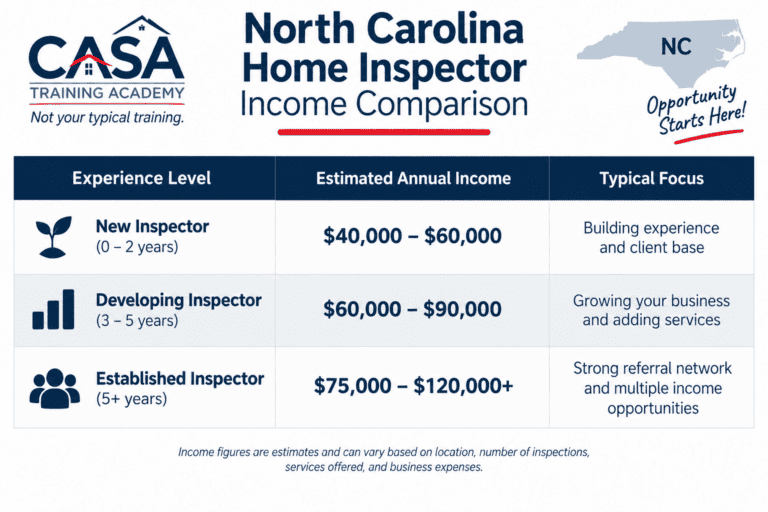
A new North Carolina home inspector may target approximately $40,000–$60,000 in annual gross income as the business develops, although actual results can vary considerably. Part-time inspectors will make less.
New inspectors may improve their income potential by:
• Working for an established inspection company while gaining experience
The first year is often less about maximizing income and more about gaining experience, refining your inspection process, and developing relationships that can generate repeat and referral business, generating the potential for a higher average home inspector salary.
- Working for an established inspection company while gaining experience
- Building relationships with real estate professionals and past clients
- Investing in marketing and a strong online presence
- Developing an efficient inspection and reporting process
- Providing excellent customer service that generates referrals and reviews
Expect business to be slow at first as you build your business, reputation, and referral base. At first, you will spend more time marketing and networking than inspecting; over time, that will change. How long this takes depends heavily on the individual, their skills, and their dedication.
Established Home Inspectors: Experience Pays

Inspectors who have been in business for several years often have more opportunity to increase their income. A steady referral network, strong online reviews, established pricing, repeat clients, and efficient scheduling can make a significant difference in the average home inspector salary.
An established independent inspector may generate approximately $75,000–$120,000+ in annual gross income, with some businesses exceeding that range.
Business revenue is not the same as take-home salary; other operating expenses must be considered.
- Insurance
- Vehicles
- Equipment
- Software
- Marketing
- Taxes
- Training
Employee vs. Business Owner

Working for an inspection company can provide an immediate workload, lower startup costs, less responsibility for marketing, and an opportunity to gain experience. The tradeoff is that compensation is generally determined by the employer or compensation agreement.
Owning an inspection business gives the inspector greater control over pricing, scheduling, marketing, service offerings, and brand development. It also means taking responsibility for business expenses, lead generation, administration, and risk.
Grow Your Income with Additional Services
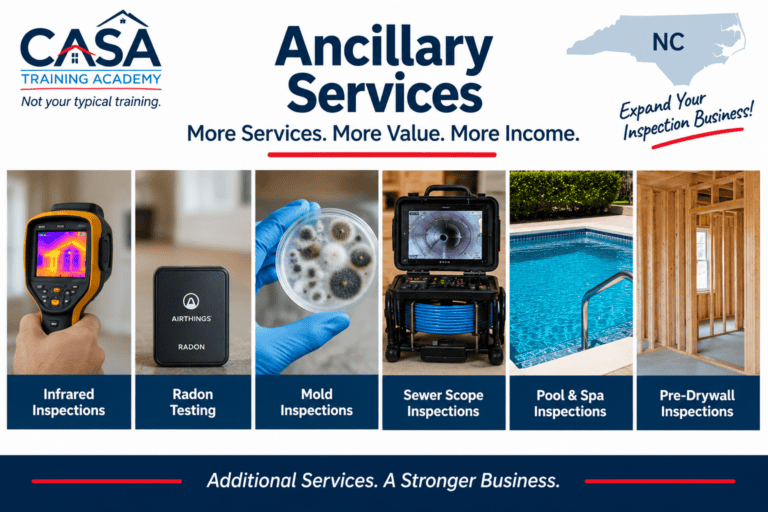
One of the ways established inspectors can increase revenue per client is by adding ancillary and specialty services. Depending on qualifications, licensing requirements, and the market, these may include:
• Sewer camera inspections
• Radon testing
• Water quality testing
• Mold inspections or sampling
• Infrared inspections
• Pool and spa inspections
• Pre-drywall inspections
• New-construction phase inspections
Adding services can increase the value of each appointment while giving clients the convenience of obtaining multiple inspection services from one provider. Ancillary services can significantly increase the average home inspector’s salary.
What Determines Your Income?
Several factors can influence how much a North Carolina home inspector earns, including geographic market, inspection volume, inspection fees, experience, online reputation, referral relationships, marketing, service mix, efficiency, and customer service.
A technically skilled inspector still needs a steady flow of clients. For independent inspectors, learning how to operate and market a business can be just as important to long-term income as learning how to inspect a home.
Education Is an Investment in Your Business
Quality home inspector education should do more than help you prepare for a licensing examination. Hands-on experience, field training, exposure to industry experts, and specialty training can help shorten the learning curve as you build your inspection career.
CASA Training Academy focuses on practical training for North Carolina home inspectors, including field training and specialty courses designed to help inspectors develop their skills and expand the services they can offer.
The Bottom Line
There is no single average home inspector salary that applies to every North Carolina home inspector. A new inspector building a client base will generally have a different income picture than an established inspector with years of experience, a strong referral network, and multiple ancillary services.
The opportunity grows as your experience, reputation, efficiency, and service offerings grow.
Whether your goal is to work for an established company or build your own inspection business, education and experience provide the foundation.
CASA Training Academy — Not your typical inspector training.